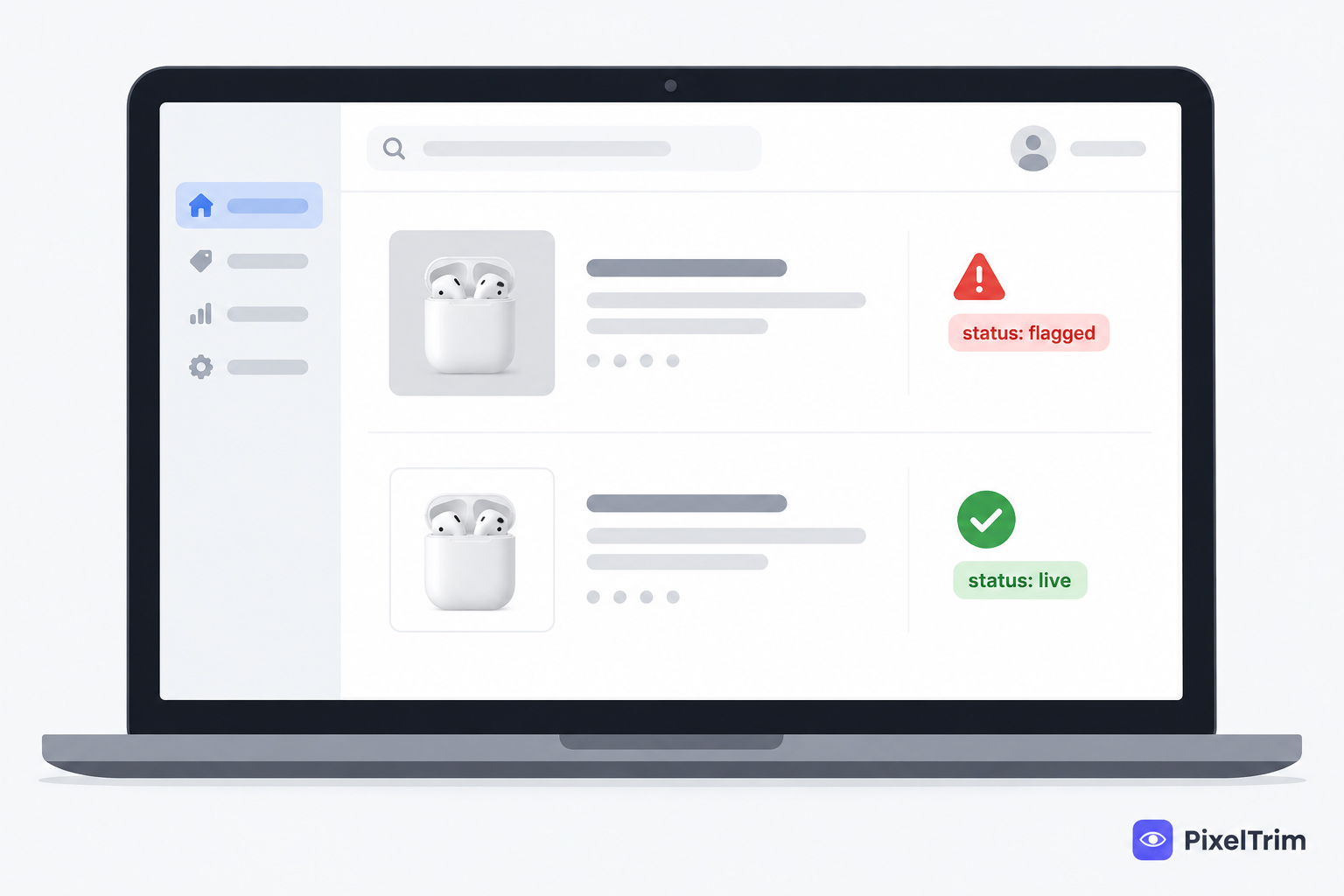
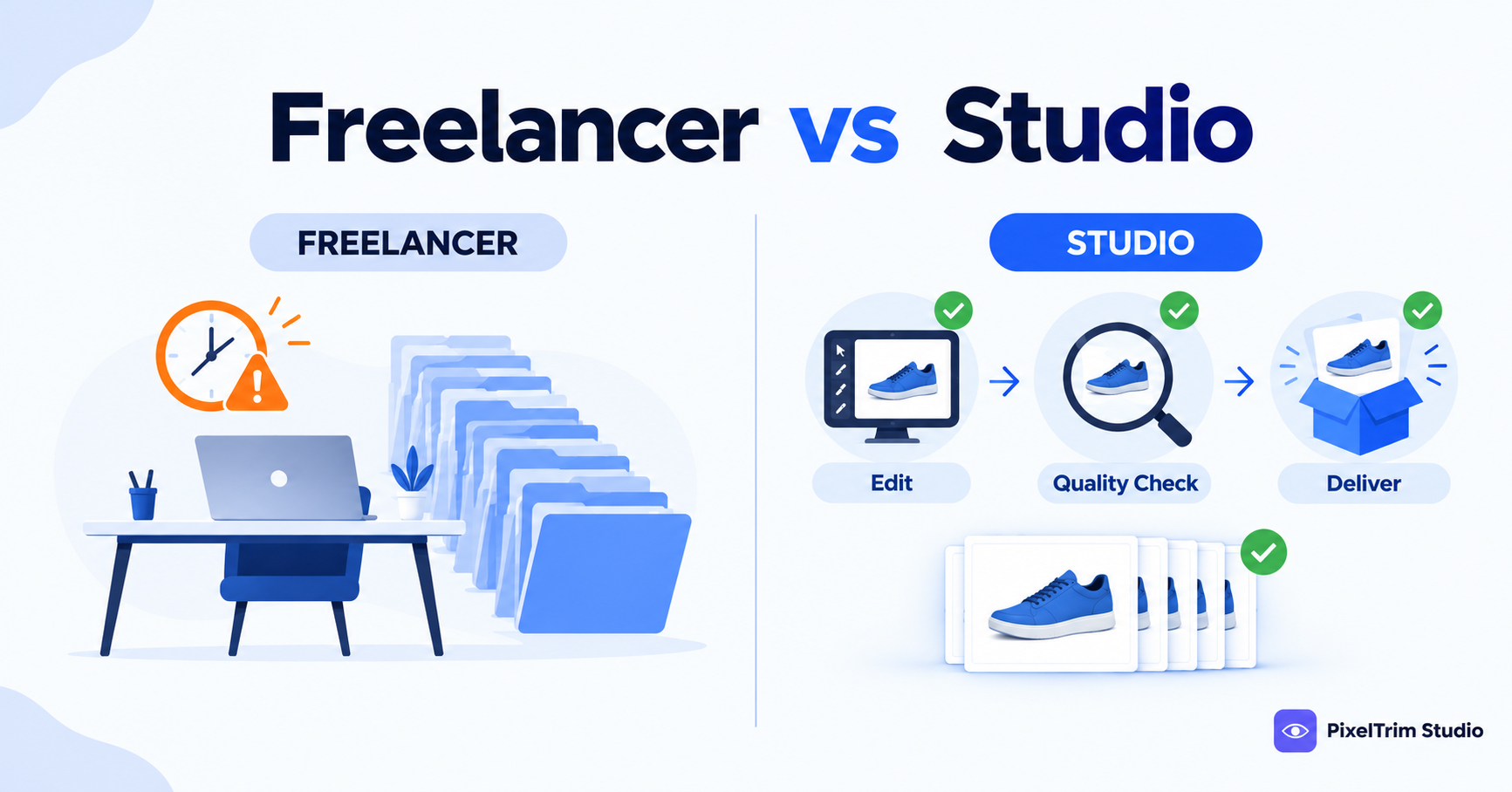
Most "complex" edits we see aren't complex because the product is complicated — they're complex because of how the photo was shot. A few small habits at the shoot stage can cut your editing cost and turnaround time significantly.
1. Shooting on a busy or colored background
A plain white, grey, or seamless paper backdrop gives an editor a clean line to trace. A cluttered desk, patterned fabric, or a background close in color to the product forces manual point-by-point tracing — adding time to every image in a batch. This is exactly the kind of edge work covered in our clipping path guide.
2. Inconsistent lighting across a batch
If image 1 in your batch is bright and image 40 is dim, an editor has to color-correct each one individually instead of applying one setting to the whole set. Shoot your full batch under the same light, at the same exposure.
3. Soft focus or motion blur on edges
Clipping path accuracy depends on a sharp, well-defined edge. A slightly out-of-focus product forces the editor to guess where the real boundary is — no amount of editing skill fully fixes a soft edge.
4. Reflections and shadows baked in
If you want a clean shadow-free cutout, shooting on glass or glossy surfaces with strong existing shadows means the editor has to remove the old shadow before adding a new one — double the work.
5. Inconsistent framing and crop
Mixing close-up shots with wide shots in the same batch makes it hard to deliver a uniform set of thumbnails. Keep your product roughly the same size and position in the frame across a batch.
None of this means you need a studio
A phone camera, a window for natural light, and a plain white sheet behind the product is enough for most small sellers — the goal is consistency and a clean edge, not expensive equipment. Whether your product needs a straightforward clipping path or something more detailed like image masking, shooting it right the first time keeps editing fast and affordable.
Not sure if your current shots are edit-ready? Send us a sample and we'll tell you honestly — plus a free trial edit to show you the difference.
Get a Free Trial Edit →Tags
Ready to get your images edited?
Upload 2 photos for a free trial edit — returned in under 24 hours.
Start free trial →