When a fresh trade-in rolls onto a dealership lot, the priority is getting it online as fast as possible. The car gets detailed, driven out to the photo staging area, and photographed from fifteen angles. But in the rush to push inventory to AutoTrader, Cars.com, and CarGurus, one detail frequently derails an otherwise sharp set of photos: the front and rear license plates.
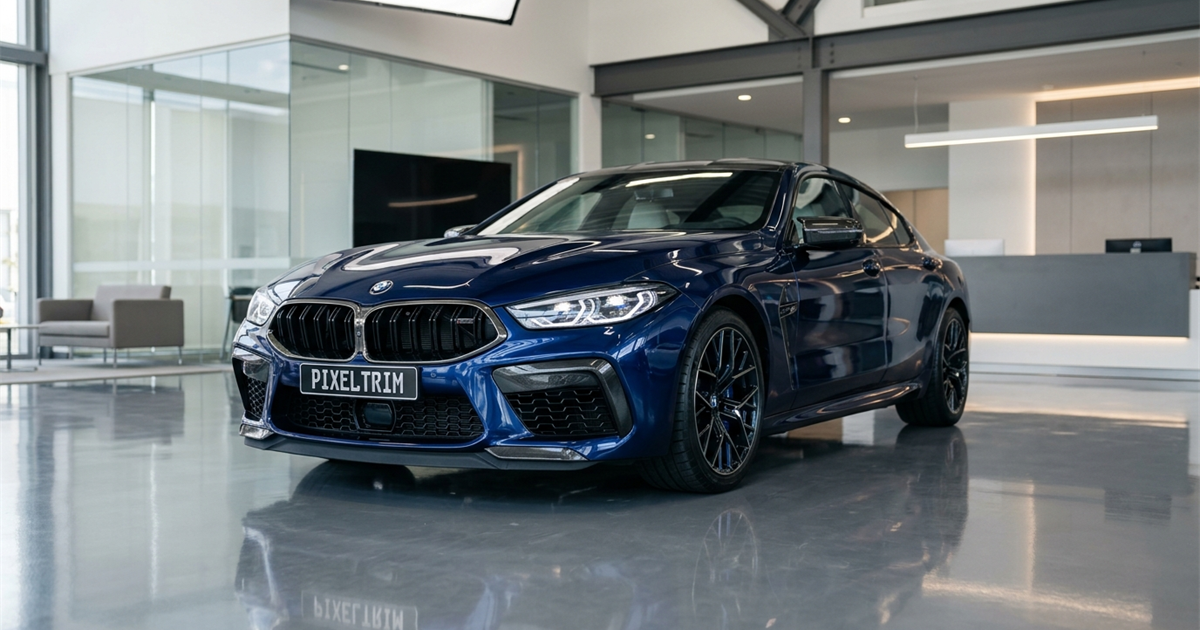
Leaving a previous owner's state plate visible exposes their registration data and makes a front-line certified pre-owned vehicle look like a raw, unprocessed trade-in. On the other hand, slapping a crude digital mosaic smudge over the plate makes the listing look like a police evidence photo or an amateur classified ad.
Professional dealerships treat the license plate area as prime digital real estate. Whether through seamless digital plate deletion, compliant plate blurring, or combining plate cleanups with full car background replacement, managing license plates properly protects customer privacy, prevents vehicle cloning, and elevates your digital showroom. Here is what every dealer and automotive photographer needs to know about license plate editing, privacy compliance, and realistic production costs.
Why Dealerships Must Address License Plates on Listing Photos
For private sellers on Facebook Marketplace or Craigslist, blurring a plate is a personal choice. For commercial franchise dealers, independent lots, and auction houses, it is a matter of compliance, risk mitigation, and brand presentation.
1. Legal Compliance & Data Privacy
In the United States, the Driver's Privacy Protection Act (DPPA) restricts public access to personal information connected to motor vehicle records. While a plate number alone does not directly reveal a home address to the public, modern data scrapers and reverse-lookup services can frequently connect registration numbers with previous owners. In the European Union and the UK, license plates are explicitly classified as personal data under GDPR. Publishing unedited plates of trade-ins can result in compliance disputes with former vehicle owners.
2. Preventing Vehicle Identity Theft & "Cloning"
Vehicle cloning is a growing concern across the automotive retail sector. Criminals actively scan high-resolution listing photos on major aggregator portals looking for clean vehicle identification. When they find an unblemished car matching the make, model, year, and color of a stolen or cloned vehicle, they print duplicate plates using that exact registration number. The legitimate dealer or future buyer is then left dealing with automated toll violations, parking tickets, and police inquiries.
3. Front-Line Ready Perception
Car shoppers judge inventory condition in fractions of a second. A used SUV showing an out-of-state plate, bent metal, or peeling registration tags sends an immediate subconscious signal: this vehicle was just dropped off and hasn't been reconditioned yet. Replacing the plate with a crisp dealer vanity plate or cleanly blurring it signals that the vehicle has passed inspection and is showroom-ready.
Four Ways Dealerships Handle License Plates (Comparison)
How you treat license plates across your catalog dictates both the visual quality of your digital showroom and your operational overhead. Most lots choose from four primary approaches:
| Editing Method | Visual Impact | Turnaround & Effort | Best Suited For |
|---|---|---|---|
| Raw / Unedited Plate | Unprofessional; exposes registration tags; invites cloning risks. | Zero effort; instant upload. | Low-margin wholesale lots or auction clearance. |
| Automated AI Smudge / Mosaic | Messy; pixel halos bleed into bumper grilles and parking sensors. | Fast via mobile apps, but frequently glitches on angled shots. | Quick-turn private listings; budget independent dealers. |
| Seamless Bumper Deletion | Ultra-clean, OEM brochure look; removes brackets and mounting holes digitally. | Requires skilled manual retouching to clone texture and lighting. | High-end exotics, sports cars, and new OEM inventory. |
| Branded Dealer Vanity Plate Insert | Premium, uniform look; turns every listing photo into dealership marketing. | Requires perspective warping, plate frame shadow, and gloss matching. | Franchise dealerships, multi-location dealer groups, and certified pre-owned lots. |
The Technical Pitfalls of Automated AI Plate Blurring
Many dealership inventory apps now offer automated license plate blurring built directly into the camera workflow. While the promise of one-click automation sounds appealing, algorithmic blurring creates three specific flaws that commercial retouchers frequently have to fix:
- Grille & Sensor Bleed: AI algorithms detect rectangular plate shapes, but their blur masks routinely expand beyond the frame. On modern vehicles with front radar domes, park assist sensors, or intricate honeycomb grilles, the blur smudges the bumper texture, making it look like a physical repair or collision damage.
- Angle & Perspective Failure: Automated tools work reasonably well on dead-straight front shots. However, most front-line listing photos are shot at dynamic three-quarter angles. Standard blur algorithms fail to calculate the focal taper, leaving the edges of the plate numbers partially visible while blurring the surrounding body paint.
- Inconsistent Rear Plate Detection: Rear plates recessed deep into liftgates, shadowed under bumper lips, or surrounded by chrome surrounds frequently get missed completely by automated filters, resulting in half your inventory having blurred fronts and raw, exposed rears.
When buyers see a blurry blob on a bumper, their immediate question is: What are they hiding? Clean plate editing eliminates that doubt entirely.
Professional Plate Retouching: How It Is Done Right
When professional automotive retouchers edit dealership photos, they treat the plate area with the same technical precision as body panel correction or studio background extraction. Just as complex vehicles require hand-drawn clipping paths to separate intricate wheel spokes and mirrors cleanly, plate retouching requires careful manual geometry.
1. Perspective & Keystone Alignment
A static digital logo pasted over a plate looks flat and artificial. Professional editors measure the camera's angle of incidence, applying perspective distortion and keystoning so the insert sits naturally inside the physical plate bracket.
2. Ambient Occlusion & Grounding
Real license plates cast subtle drop shadows on the bumper surface beneath them, and the outer frame casts an inner shadow on the plate face. Just as we use natural drop shadows to ground tires onto studio backdrops, retouchers paint directional ambient occlusion along the plate edges to anchor it realistically onto the car's bodywork.
3. Lighting & Gloss Matching
If the car was photographed outdoors under an overcast sky, a high-contrast, glossy white logo plate will look out of place. Editors sample the ambient color temperature of the vehicle's headlights and paint reflections, adjusting specular highlights and white balance so the plate area matches the physical scene.
Whether you manage pre-owned inventory, OEM catalogs, or require a specialized product color change service for commercial vehicle fleets, consistent digital asset preparation ensures uniform visual quality across your entire catalog.
Dealership Photo Editing Costs & Turnaround
Managing plate editing in-house with dealership sales staff or lot porters is notoriously inefficient. Staff spend hours fiddling with smartphone editors when they should be closing sales, and the results vary wildly from car to car.
Outsourcing automotive photo retouching to a dedicated studio provides standardized quality, guaranteed turnaround times, and predictable per-vehicle pricing.
At PixelTrim Studio, automotive photo retouching is organized into three straightforward commercial packages:
- Basic Package ($2.99 / image): Ideal for fast turnarounds. Includes license plate blur, lot background cleanup, basic color correction, and JPG delivery.
- Standard Package ($5.99 / image): Our most popular dealership option. Includes complete background removal or swap, glare & reflection reduction, sky replacement, and 1 revision round.
- Advanced Package ($9.99 / image): Complete front-line showcase editing. Includes full paint panel retouch, wheel & tire shine, lot clutter removal, and layered PSD files with revisions.
What Does It Cost per Vehicle?
A typical dealership listing uses 12 to 16 exterior photos, with front and rear plate editing needed on 4 to 6 key hero angles (front straight, front 3/4, rear straight, rear 3/4). For an average intake of 25 vehicles per week:
Applying clean background cleanup and plate blur on primary exterior angles averages just $12 to $18 per vehicle under the Basic package ($2.99/image). When paired with full background replacement and reflection reduction under the Standard package ($5.99/image), listings average $24 to $36 per vehicle. Clean exterior presentation can help keep digital showrooms uniform, reduce trade-in privacy disputes, and present vehicles with certified-level standards.
All orders are delivered within 24 to 48 hours, with rush delivery available for urgent front-line listings.
Frequently Asked Questions
Can you insert our dealership's official logo onto the plate?
Yes, on custom dealership orders. While our standard online packages focus on clean plate blur (Basic $2.99) and background removal (Standard $5.99), dealers can include branded vanity plate artwork in their order instructions to have custom inserts perspective-matched across their inventory.
Is license plate blur required by law when selling cars online?
While federal US law does not universally mandate blurring plates for private sales, commercial dealers are bound by data privacy standards (such as DPPA and state consumer protection statutes), and European dealers must comply with GDPR. Blurring or replacing plates is an automotive industry best practice to prevent plate cloning and protect prior owner privacy.
What is the difference between plate blur and plate replacement?
Plate blur applies a clean digital blur over the original numbers, leaving the existing plate shape and frame intact. Plate replacement digitally covers the plate area with a custom, perspective-matched dealership vanity plate featuring your dealership's branding or website URL.
How do you handle cars photographed at steep angles?
Automated software usually fails on steep 3/4 angles because the plate is trapezoidal rather than rectangular. Our retouchers manually transform the insert using perspective warp, adjusting bracket shadows and surface curvature so the replacement plate looks physically bolted to the car.
Can we test your plate retouching on a few sample cars?
Absolutely. You can send us up to three sample vehicle photos through our free trial order form. We will process your vehicle photos, test plate editing, and return front-line ready proofs within 24 hours at no cost.
Tags
Ready to get your images edited?
Upload 2 photos for a free trial edit — returned in under 24 hours.
Start free trial →