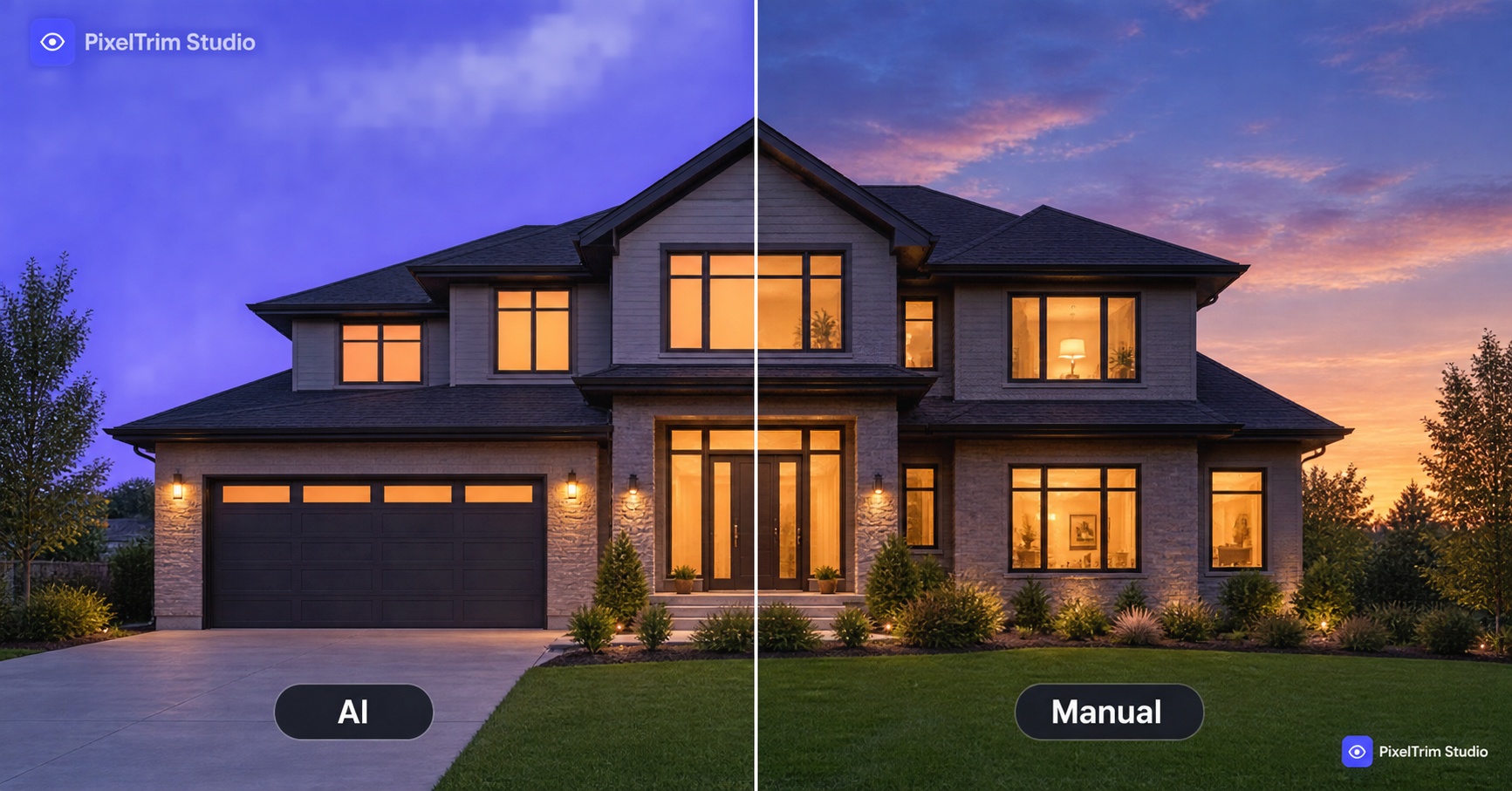
AI can blend an HDR bracket or swap a sky in seconds. It also produces the halos around window frames and the flat, artificial-looking twilight glow that real estate photographers notice immediately — and that buyers notice even without knowing why a listing photo feels "off." Here is where AI real estate editing actually holds up, where manual editing still wins, and how to tell the difference before a bad edit ends up live on the MLS.
Why Real Estate Editing Is a Harder Case for AI Than Most Categories
Most product photo editing gets reviewed before it goes live — you see the cutout, approve it, then publish. Real estate listings often move faster: bracketed shots come in, get batch-processed, and go straight to the MLS on a same-day deadline. That means a bad AI blend has a real chance of reaching buyers before anyone catches it. For a full breakdown of what these techniques do, see our HDR blending, sky replacement, and virtual twilight guide.
HDR Blending: Where AI Struggles Most
HDR blending merges 3–5 bracketed exposures into one image with a correctly lit window and interior. AI blending tools do this fast, but they tend to over-correct at the window edge, producing a visible halo or glow line where the bright and dark exposures meet. A manual editor blends the same brackets by hand, masking the transition so it looks like the room was simply lit well — no telltale ring around the window frame.
AI is usually fine here for quick internal reviews or a photographer's personal portfolio. For anything going straight to an MLS submission, a hand-blended result is the safer call.
Sky Replacement: AI Gets Close, But Matching Light Is the Hard Part
Swapping an overcast sky for a clean blue one is a task AI handles reasonably well on a simple exterior shot. Where it falls apart is matching the new sky's color temperature and light direction to the rest of the photo — a bright, cool-toned sky pasted over a warm, late-afternoon exterior reads as obviously fake, even to a buyer who couldn't explain why. A manual editor adjusts the sky's warmth and shadow direction to match the original shoot, which is a judgment call AI batch tools don't make well at volume.
Virtual Twilight: The Category Where Manual Editing Wins Outright
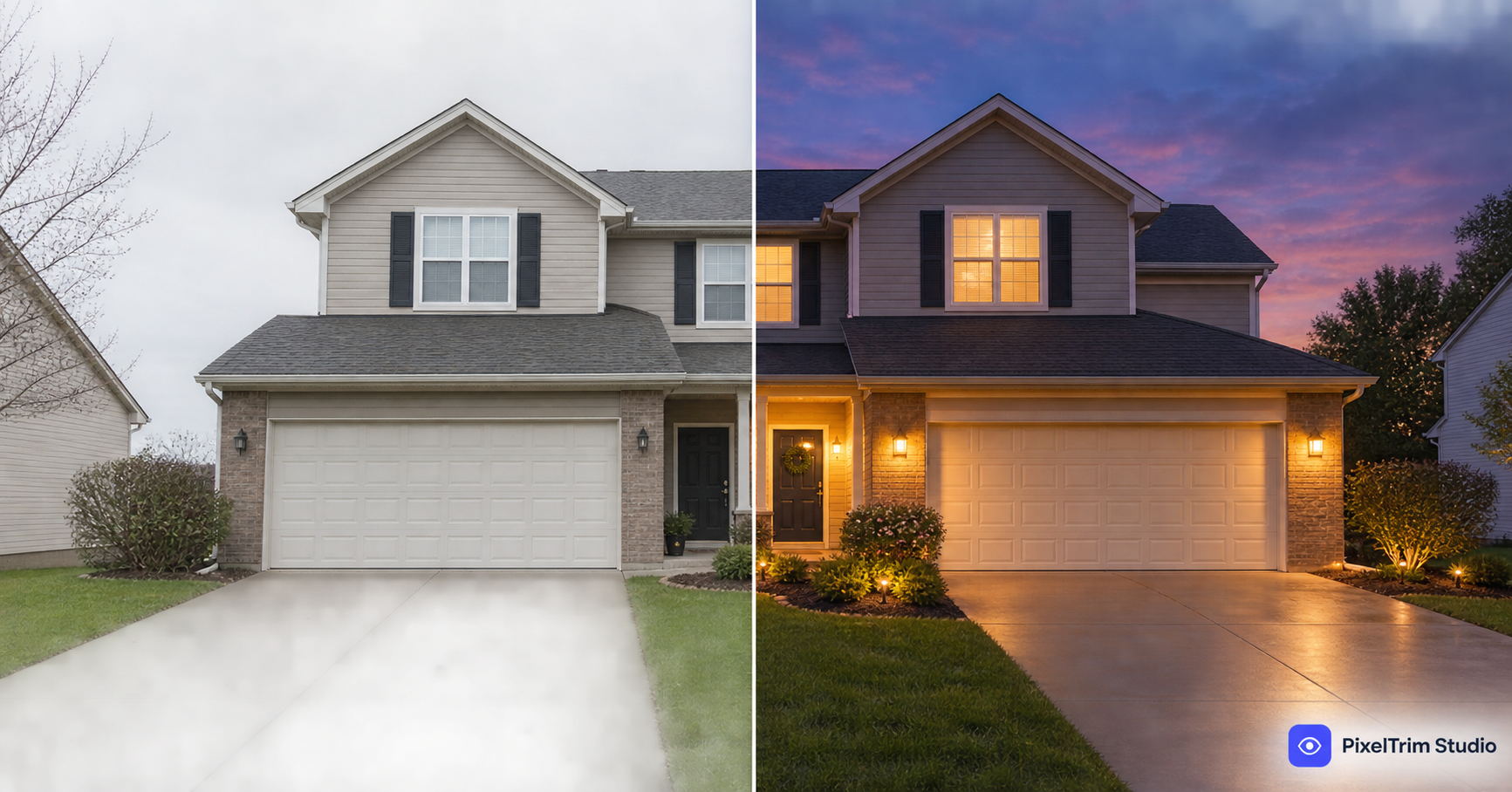
Virtual twilight — converting a daytime exterior into a dusk shot with warm interior window glow — is the most manually demanding of the three techniques, and it shows in AI output. Automated twilight conversions tend to apply one flat purple-blue gradient regardless of the house's actual roofline, tree cover, or window placement, and the "interior glow" often looks like a uniform orange fill rather than light coming from specific rooms. Manual twilight work matches the gradient to the specific exterior and places window glow room by room, which is why this package costs more — see the pricing breakdown below.
Cost Difference: Manual vs AI Real Estate Editing
| Package | Manual (PixelTrim) | Typical AI Tool |
|---|---|---|
| Basic HDR blend | $1.49 / image | Often free to $0.20 / image |
| Sky replacement (Enhanced) | $2.49 / image | $0.10–$0.50 / image |
| Virtual Twilight | $4.99 / image | $0.50–$1.50 / image |
AI tools are dramatically cheaper per image. The gap is real quality risk on the two techniques above, weighed against real cost savings — which is why volume matters in this decision (see below). For a full price breakdown across every real estate package, see our real estate photo editing cost guide.
When AI Real Estate Editing Is Actually Fine
- Internal or draft review images that won't go live, just need a quick preview of lighting
- Simple exteriors with clean, unobstructed skies and no complex window/glow needs
- Very high-volume, low-price listings where per-image editing budget is near zero
When Manual Editing Is Worth the Extra Cost
- Anything going directly to MLS without a human review step before publishing
- Twilight hero shots, since this is where AI output looks most obviously synthetic
- Higher-value listings where a buyer scrolling past an odd-looking photo is a real cost
- Full listing batches that need a consistent look across every image, not a mix of good and bad AI results
Compliance matters here too — check our MLS photo requirements guide before choosing either route, since some boards flag over-processed AI edits during review.
If You're Weighing Outsourcing Either Way
Whether you land on manual or AI, most photographers editing more than a handful of listings a week end up outsourcing rather than doing it in-house. Our HDR image blending outsourcing guide covers what to check in a provider regardless of which editing approach they use. For the general case across other photo categories, see our manual vs AI photo editing comparison.
Not sure which approach your listings need? See our real estate photo editing service and send 2 sample images for a free manual trial edit before you decide.
FAQ
Is AI good enough for real estate HDR blending?
For quick internal previews, often yes. For anything going straight to the MLS, manual blending avoids the halo and glow artifacts that show up around window frames in automated blends.
Can AI handle sky replacement for listing photos?
AI handles simple sky swaps reasonably well, but matching the new sky's color temperature and light direction to the rest of the photo is where manual editing still wins.
Why does virtual twilight look fake when done with AI?
Automated tools tend to apply one flat gradient and a uniform interior glow regardless of the house's actual layout, while manual editors match the gradient and place window glow room by room.
How much more does manual real estate editing cost than AI?
Manual editing runs from $1.49 to $4.99 per image depending on the package, versus roughly $0.10 to $1.50 per image for most AI tools — the gap widens for twilight work specifically.
Do MLS boards reject AI-edited photos?
Most boards don't ban AI editing outright, but they do flag obviously over-processed or unrealistic images during review — see our MLS photo requirements guide for what typically gets flagged.
Tags
Ready to get your images edited?
Upload 2 photos for a free trial edit — returned in under 24 hours.
Start free trial →