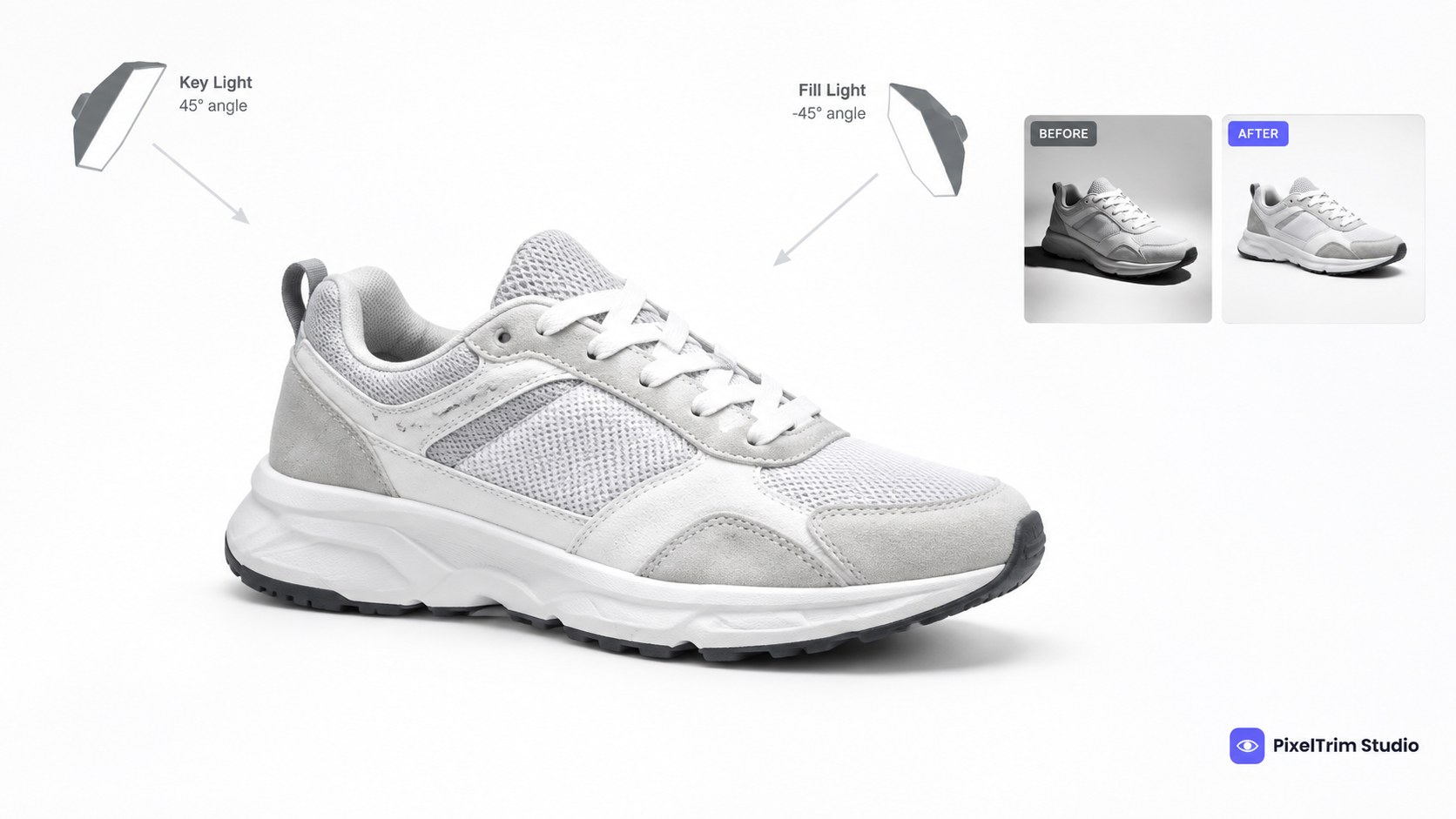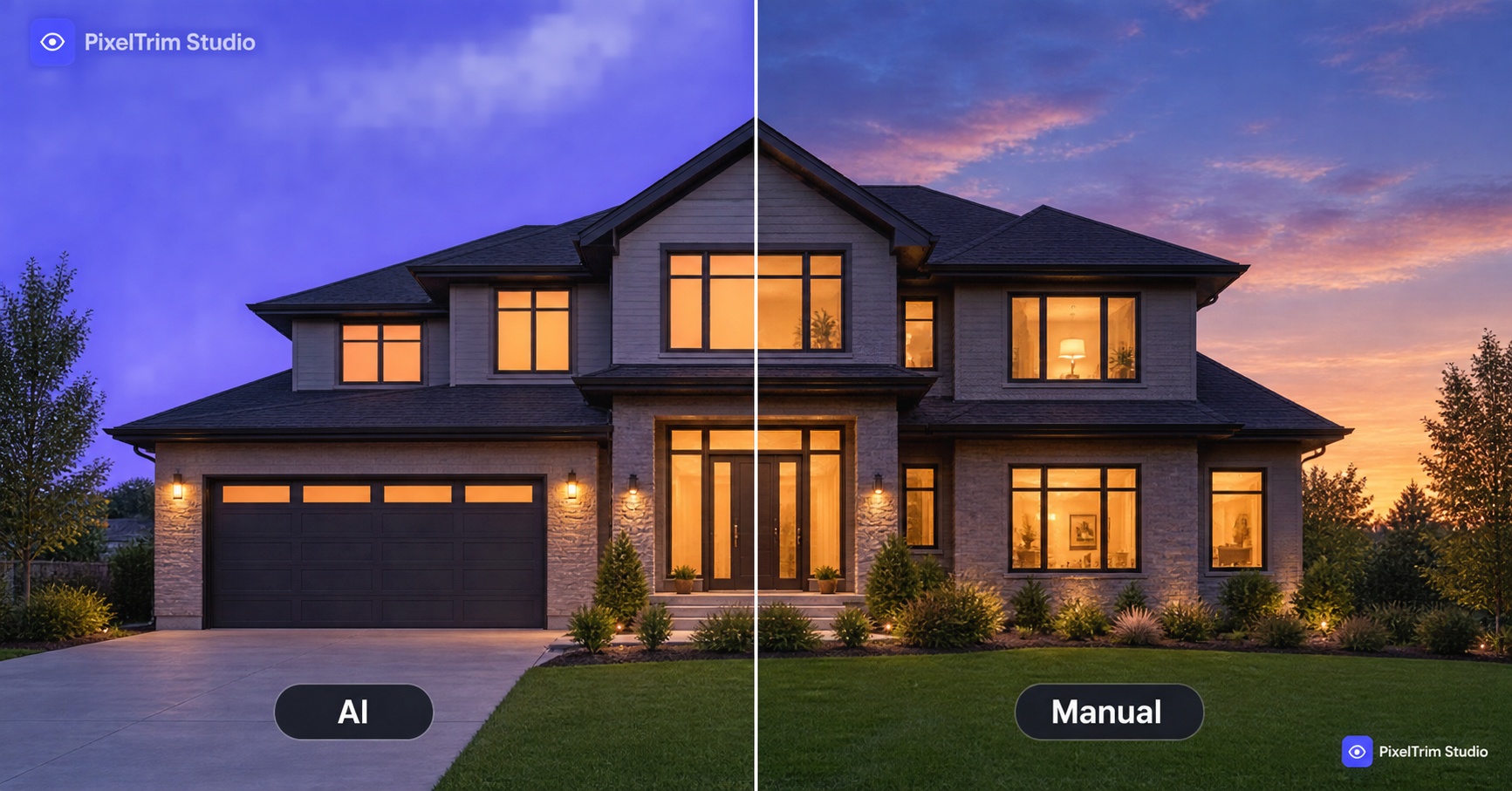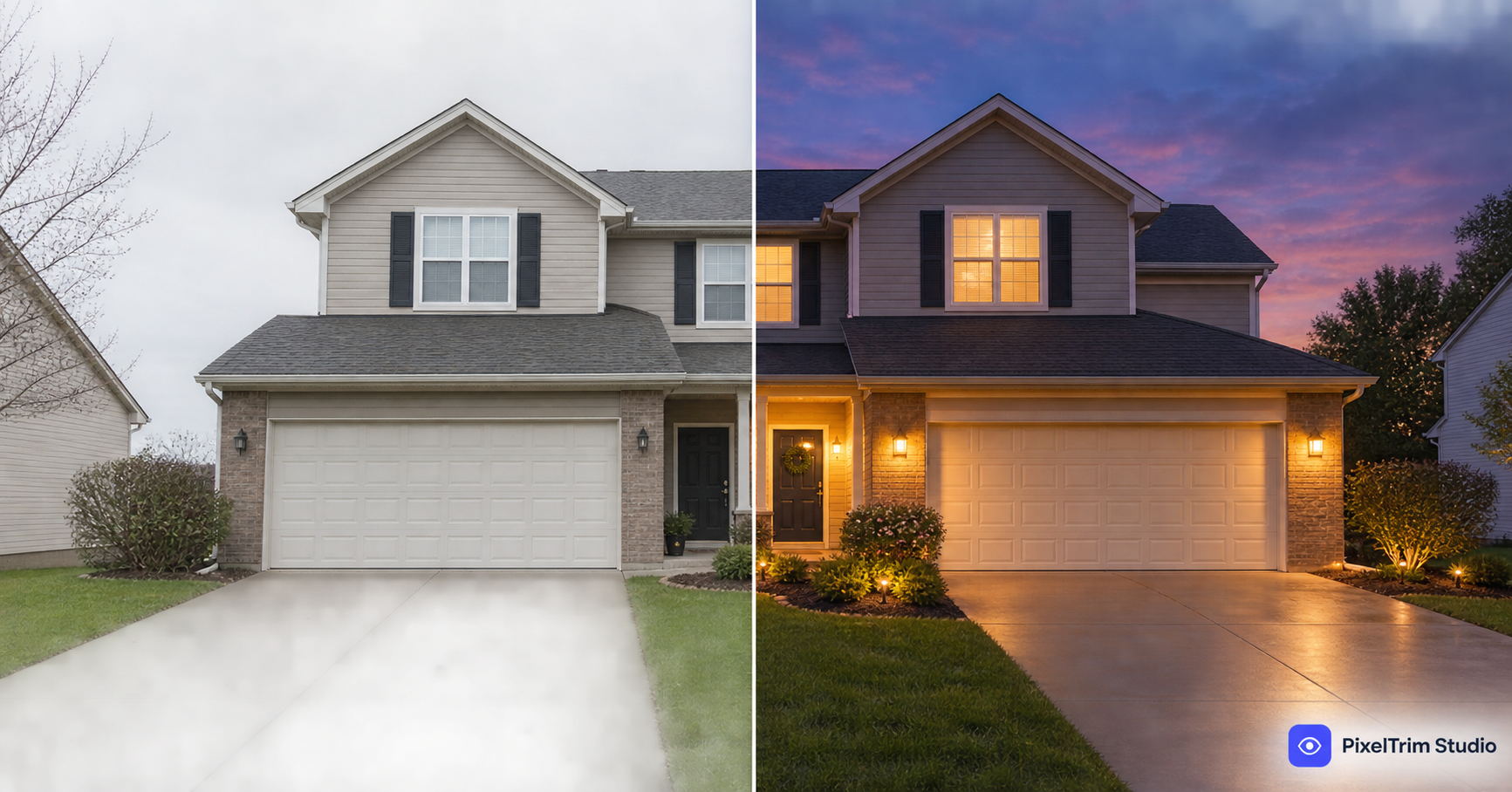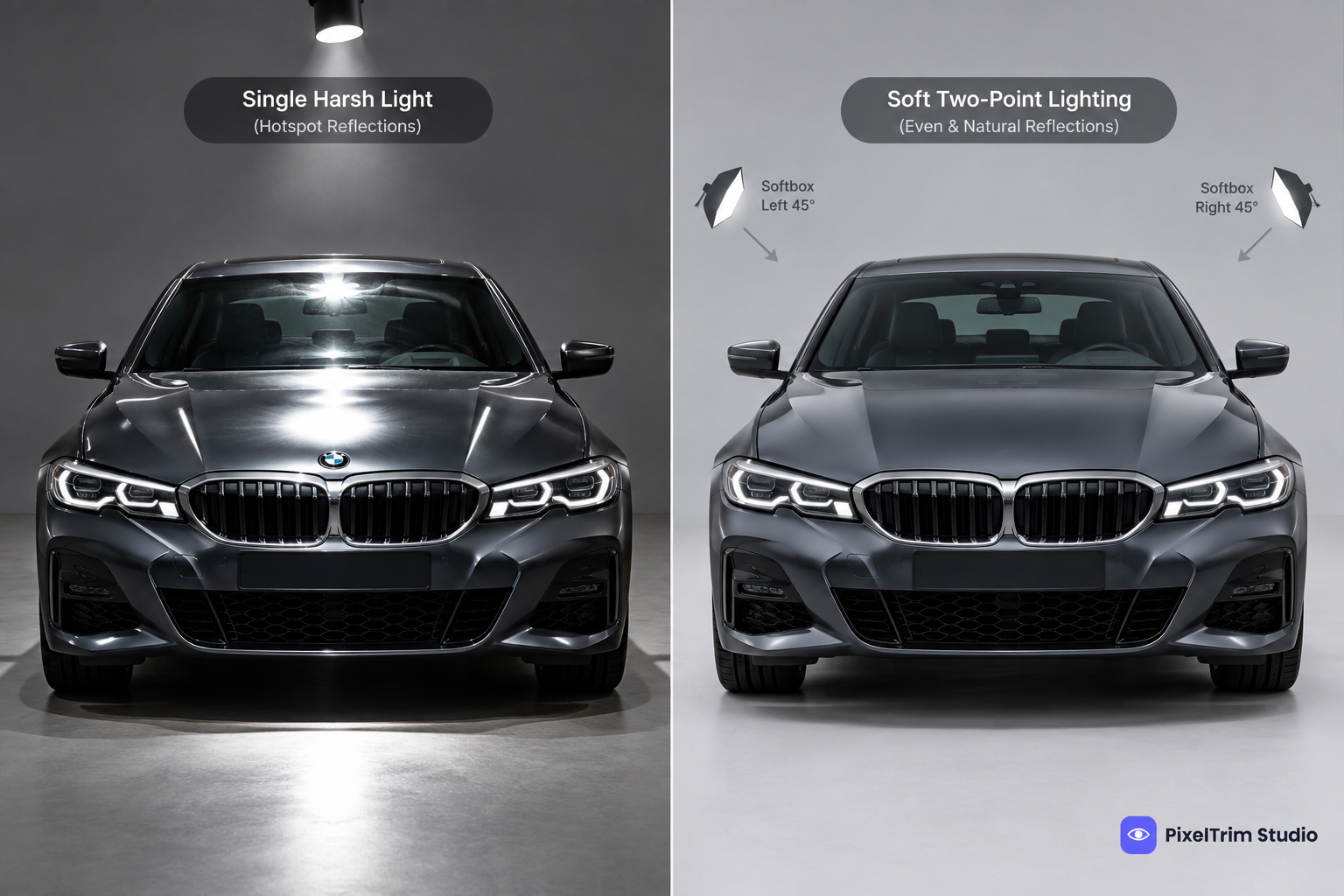
Most "complex" car edits aren't complex because of the vehicle — they're complex because of how the lot shot was set up. A single overhead light, a cluttered background, a plate left uncovered — every one of these turns a 15-minute retouch into a 45-minute one, times 20 photos per vehicle. If you're shooting inventory yourself (or briefing a lot photographer), a few habits at the shoot stage cut your editing bill without changing a single thing about the car.
Why Shoot Quality Changes Your Editing Bill
Cars are one of the least forgiving categories to retouch — reflective paint and glass mean editors can't fake a clean edge or a flat color match, they have to correct it panel by panel. See our full breakdown of what a car photo editing service actually includes. The short version: every avoidable flaw in the raw lot photo becomes billable editing time, and our car photo editing cost guide shows exactly how much that adds up per image and per vehicle.
Lighting Setup
Shoot in flat, even light — not direct sun
Harsh midday sun creates hard reflections across the hood, roof, and windows that an editor then has to manually reduce without flattening the paint's natural shine. Overcast days or the golden-hour window (early morning, late afternoon) give softer, more even light that's far easier to correct.
Avoid parking under mixed light sources
A car half in shade and half in direct sun creates a color-temperature split across a single panel that's genuinely hard to blend evenly in post. Pick one lighting condition — fully shaded or fully lit — for the whole shoot, not a spot with dappled shade from a tree or building.
Watch for reflections in glass and chrome before you shoot
Walk around the frame and check what's reflected in the windshield, windows, and chrome trim — your own reflection, another vehicle, a building. It's much faster to reposition the camera than to have an editor paint out a reflected photographer after the fact.
Background and Location
Pick a clean spot, not just an empty one
An empty parking lot still has cones, signage, curb lines, and other cars at the frame edges. A plain wall, a gradient backdrop, or a corner of the lot with nothing but pavement and sky behind the vehicle gives an editor a much faster background swap — the same principle covered in our general product photography mistakes guide.
Keep the same spot for a full batch
Shooting 20 vehicles across five different corners of the lot means five different backgrounds, five different lighting setups, and an inconsistent-looking batch once edited. Lock one location and angle for the whole session.
Camera Settings and Angles
- Shoot square to the vehicle, not at an angle — a true 3/4 front and 3/4 rear angle is the marketplace standard; shooting crooked or too close forces an editor to correct perspective distortion that a straight shot avoids entirely.
- Use a narrower aperture (f/8–f/11) so the full length of the car stays in focus, not just the nearest panel.
- Keep the horizon level — a tilted horizon behind the car means extra straightening work on every background replacement.
- Shoot the full standard set consistently: front 3/4, rear 3/4, both side profiles, interior dashboard, interior rear seat, and any damage or feature shots — the same six-to-ten angle set for every vehicle in a batch.
- Cover the license plate or note it needs blurring if privacy matters for your listing — flagging it before editing is faster than catching it after.
Shooting for a Full Lot, Not One Car
If you're photographing more than a handful of vehicles, lock your setup before you start: same spot, same camera height, same distance, same time of day if possible. A batch shot under a locked setup edits in a fraction of the time compared to one where every car was photographed slightly differently — the same volume-pricing logic our car photo editing cost guide walks through for full-inventory budgets.
What to Still Leave to a Professional Editor
Even a well-shot vehicle usually still needs glare reduction, paint-accurate color correction, and a consistent background across the batch — a clean shoot just means that work goes faster and costs less, not that it disappears. See our manual vs AI car photo editing comparison if you're deciding who should handle that finishing pass, or how consistent retouching affects listing conversion if you're weighing whether it's worth it for dealership inventory.
Want a second opinion on your shoot setup before you photograph a full lot? Send us two sample shots and we'll do a free trial edit — you'll see exactly how much (or how little) needs fixing.
See our car retouching service →
FAQ
What's the biggest lighting mistake when shooting cars for listings?
Shooting in direct midday sun. It creates hard reflections on paint and glass that take real editing time to reduce without flattening the car's natural shine — overcast light or golden hour is far easier to work with.
Do I need a professional studio to shoot dealership inventory?
No. A clean, uncluttered spot on the lot with consistent lighting and a locked camera setup is enough for most inventory shoots — the goal is consistency across the batch, not studio equipment.
Why does my car look a different color than in person?
Usually mixed lighting — parking half in shade and half in direct sun creates a color-temperature split across the panel that's hard to correct evenly. Pick one lighting condition for the whole shoot.
Does better shooting actually lower editing costs?
Yes. Editors bill largely on how much correction a photo needs. A well-lit, consistently framed shot needs less reflection removal and color correction than a rushed handheld shot, which directly reduces per-vehicle editing time.
How many angles should I shoot per vehicle?
Most listings need six to ten shots: front 3/4, rear 3/4, both side profiles, dashboard, rear seat, plus any feature or damage shots — shot consistently across every vehicle in the batch.
Tags
Ready to get your images edited?
Upload 2 photos for a free trial edit — returned in under 24 hours.
Start free trial →