Before comparing freelancers and studios, most sellers face an earlier question: should product photo editing happen in-house at all, or go to an outside provider from day one? The spreadsheet math looks simple — a full-time editor's salary divided by images edited — until you count the parts that never show up on a job posting: software licenses, training time, sick days, and the weeks a new hire spends learning your style guide before output is usable.
Quick Answer
- In-house makes sense once you have steady, high volume (roughly 1,500–2,000+ images a month) and can keep an editor busy full-time year-round.
- Outsourced fits almost everyone else — no fixed payroll, no idle weeks between shoots, and cost that scales down when volume drops.
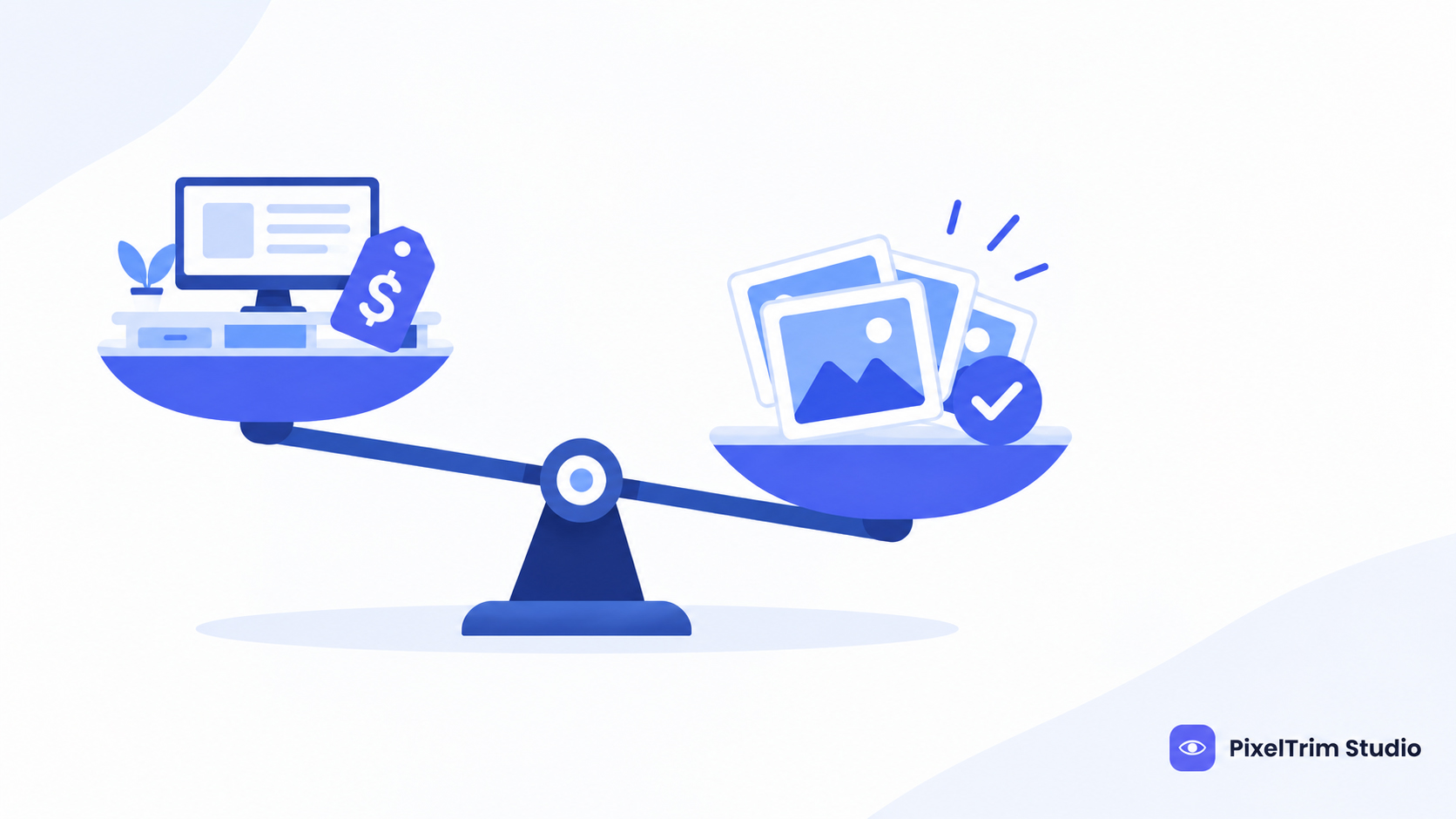
The mistake sellers make is comparing a salary quote to a per-image quote without adjusting for what each one actually includes.
In-House vs Outsourced: Side-by-Side
| Factor | In-House Editor | Outsourced |
|---|---|---|
| Fixed monthly cost | Yes, whether volume is high or low | No — you pay per image edited |
| Ramp-up time | Weeks to train on your style guide | Same-day, provider already trained |
| Capacity ceiling | One person, roughly 60–100 images/day | Team scales with your order size |
| Slow-season cost | Salary continues regardless of volume | Cost drops with volume automatically |
| Software & tools | Your responsibility to license and maintain | Included in the per-image price |
| Sick days / turnover | Output stops or drops | Team absorbs it, delivery unaffected |
| Best for | Very high, steady, year-round volume | Variable, growing, or seasonal volume |
What an In-House Editor Actually Costs
A salary figure is only the starting line. A realistic monthly total for one full-time product photo editor usually includes:
| Cost Item | Typical Monthly Range |
|---|---|
| Salary (junior–mid level editor) | Varies widely by region — budget for local market rate |
| Photo editing software license | $20–$60 |
| Hardware (monitor, tablet, workstation, amortized) | $30–$80 |
| Training & onboarding (first 4–6 weeks) | Reduced output while ramping up |
| Management time (review, QA, style-guide upkeep) | Real but rarely tracked |
These are general planning estimates, not a quote from any specific employer or region — use them as a checklist for your own budget, not a fixed number.
The number that actually matters is capacity: one experienced editor can typically turn around 60–100 straightforward cutouts a day. On a month with 20 working days, that is roughly 1,200–2,000 simple images — fewer if the batch includes ghost mannequin or heavy retouching. Below that ceiling, you are paying full salary for partial output.
What Outsourcing Actually Costs
PixelTrim Studio's current per-image tiers, for reference:
| Tier | Price | Typical Work |
|---|---|---|
| Simple | $0.39 / image | Single clipping path, plain background |
| Standard | $0.99 / image | Masking or multi-path, shadow, color correction |
| Complex | $1.99 / image | Ghost mannequin, hair or fur masking, heavy retouching |
Turnaround is 24–48 hours regardless of batch size, with one free revision round included — no software to license, no seat to keep filled between shoots. For a fuller breakdown of what moves per-image price up or down, see our product photo editing pricing guide. Always confirm current rates directly with any provider you compare.
Break-Even: When In-House Starts Making Sense
Run the comparison against your own volume: a blended outsourced rate around $0.70–$0.90/image at 2,000 images a month lands near $1,400–$1,800. That is the range an in-house salary-plus-overhead package needs to beat — and it only clears that bar if the volume stays that high every month, not just during a launch spike. Sellers who see this volume seasonally, or who are still growing toward it, almost always come out ahead outsourcing, because the outsourced cost simply shrinks in the slow months instead of sitting on payroll.
Hidden Costs Both Sides Miss
- In-house: recruiting time, a second hire needed to cover vacations, and the output dip every time your style guide changes and the editor has to relearn it.
- Outsourced: a provider with no written revision policy, inconsistent quality between batches, or a queue that gets slower right when your volume spikes — see our bulk editing guide for what tends to break at catalog scale.
How to Decide
- Plot your volume for the last 6 months. Flat and high favors in-house; spiky or growing favors outsourced.
- Add up the full in-house cost — salary, software, hardware, management time — not just the headline wage.
- Check your edit-type range. One narrow skill set is easier to hire for than five (clipping path, shadow, retouching, ghost mannequin).
- Ask what happens on a sick day or a launch-week spike under each model.
- Run a trial batch outsourced first before committing to a full-time hire — it is the lower-risk way to see real turnaround and quality.
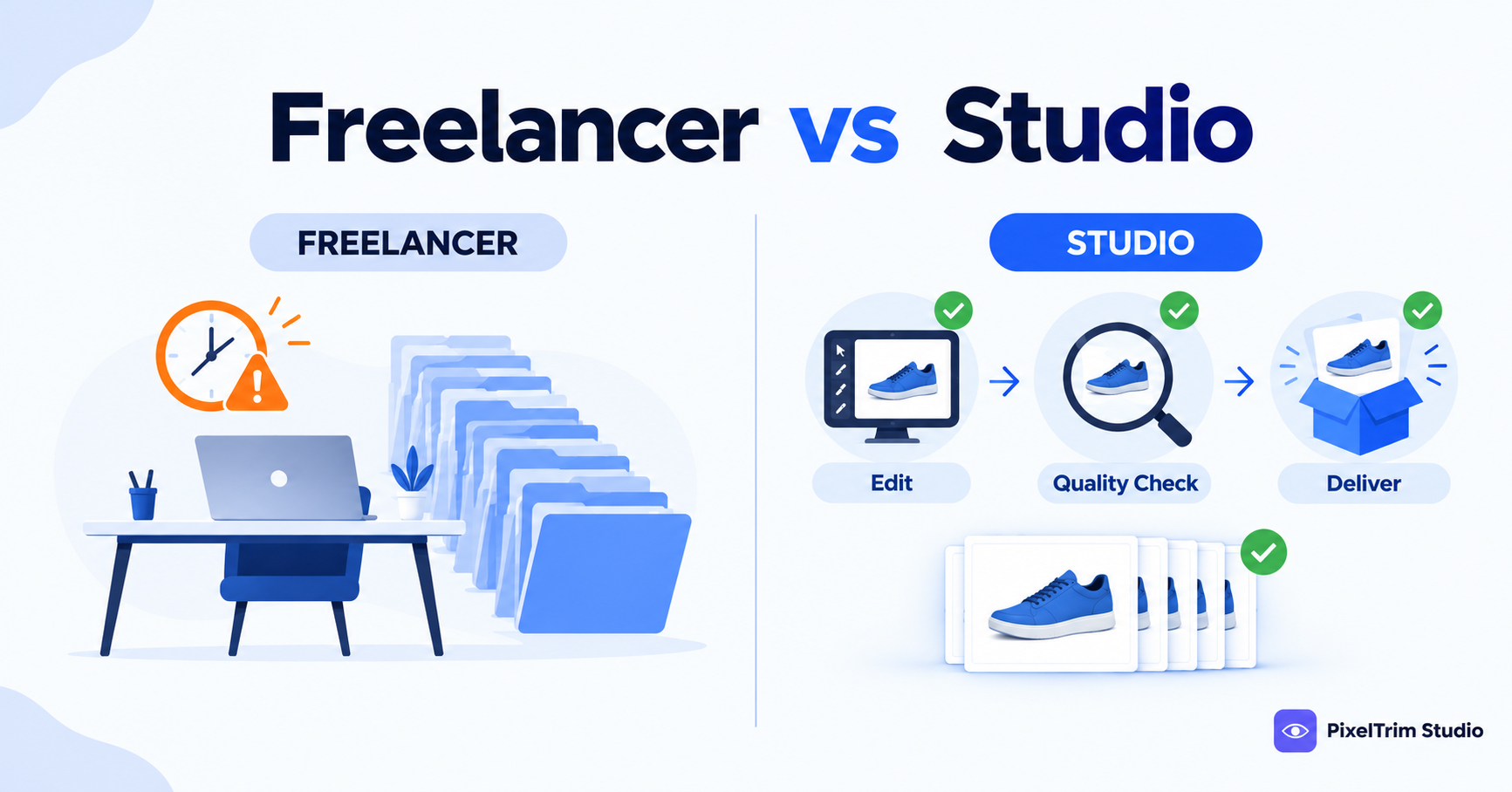
Already leaning outsourced but unsure whether to use a solo freelancer or a studio team? Our freelancer vs photo editing studio guide covers that next decision. For the full range of what a provider should include, see our product photo editing service guide, and for where AI fits into either model, see manual vs AI photo editing.
FAQ
Is hiring an in-house photo editor cheaper than outsourcing?
Only at consistently high volume. Once you add software, hardware, training and management time to a salary, the true monthly cost is usually higher than expected — and it does not shrink in slow months the way outsourced cost does.
How many product photos can one in-house editor process per month?
Roughly 1,200–2,000 simple images a month for one full-time editor, fewer for complex work like ghost mannequin or heavy retouching. Above that, you need a second hire or an outsourced overflow partner.
What does an in-house photo editor actually cost beyond salary?
Software licensing, a suitable workstation, ramp-up time while they learn your style guide, and ongoing management or QA time — all real costs that rarely appear in the initial hiring budget.
At what volume does in-house make sense?
Generally once volume is high and steady year-round, not seasonal. If your image count varies month to month, outsourcing scales down automatically in ways a fixed salary cannot.
Can I use both in-house and outsourced editing?
Yes. Many growing sellers keep a small in-house team for daily needs and send overflow batches or specialty work like ghost mannequin to an outside provider during peak volume.
Not ready to hire? Test the outsourced route first. Send 2 images for a free trial edit and see the turnaround and quality yourself: start your free trial or get a free quote.
Tags
Ready to get your images edited?
Upload 2 photos for a free trial edit — returned in under 24 hours.
Start free trial →